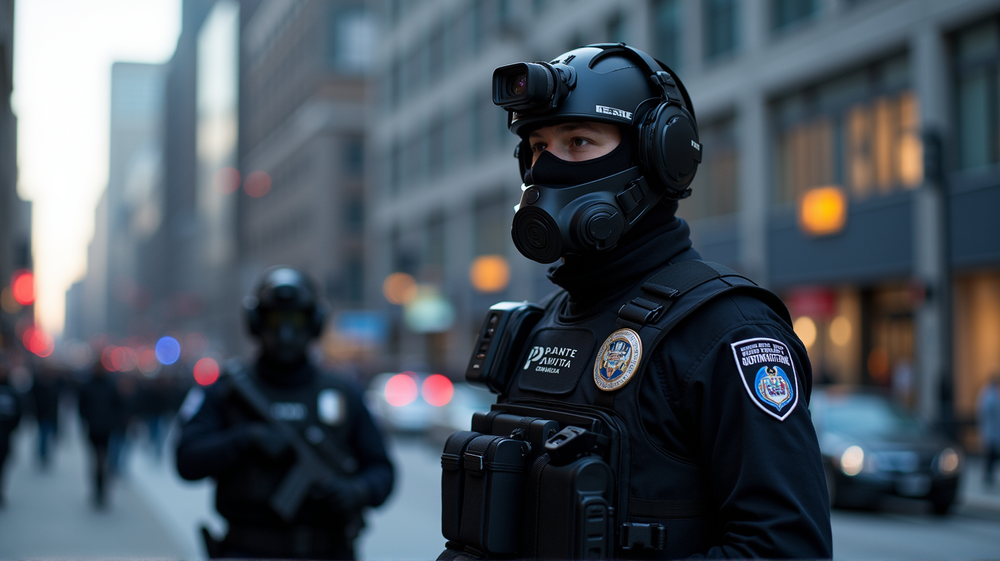
AI-Powered Body Cameras: Edmonton's Controversial Facial Recognition Test
The Dawn of AI Surveillance in Edmonton
Edmonton, Canada’s northernmost metropolis, has stepped into a futuristic landscape that once lingered only in science fiction. The city has embarked on a controversial pilot project equipping police body cameras with artificial intelligence for facial recognition, aiming to identify individuals on a “high risk” watch list. This endeavor seeks to revolutionize policing, potentially serving as a prototype for broader applications across North America.
Bridging Safety and Surveillance
At the core of Edmonton’s initiative is the promise of enhanced safety. Axon Enterprise, Inc., known for its Taser innovations, champions this technology’s potential to make policing more efficient. The AI scrutinizes over 7,000 faces classified under threats ranging from violent offenders to escape risks. Acting superintendent Kurt Martin believes this early-stage field research will boost officer safety by providing timely alerts about potential threats.
Ethical Quagmire: Risks and Reactions
Yet, this ambitious step hasn’t unfolded without apprehension. The resurrection of an idea once deemed ethically unsound has activists and experts sounding alarms. Barry Friedman, a former chair of Axon’s AI ethics board, underscores the need for rigorous public debate and vetting. “It’s imperative not to deploy such powerful technology without clear evidence of its benefits,” he cautions. As stated in ABC News, balancing utility with privacy remains a contentious dance.
Global Perspectives: A Clash of Philosophies
Edmonton’s experiment isn’t happening in isolation. The world’s views on facial recognition oscillate between acceptance and aversion. The European Union has largely banned public police use except for severe crimes, while in contrast, the UK’s adoption has yielded over 1,300 arrests in London. Axon aims to learn from Edmonton’s test, aspiring to inform future policies, including those in the United States.
Transparency: A Necessity, Not an Option
The lack of transparency surrounding this pilot has fueled skepticism. Details remain obscure about the technological mechanisms and third-party vendors involved. Critics argue for essential transparency, pointing to Edmonton’s own rocky past with certain communities. The police service’s rapport with Indigenous and Black citizens remains tenuous, adding another layer of complexity to the debate on AI’s role in policing.
The Uncertain Road Ahead
As Edmonton’s trial unfolds, it teeters on the brink of promise and peril. While some experts foresee significant breakthroughs in law enforcement efficiency, others urge caution. The pathway must be paved with transparency, accountability, and comprehensive public engagement. Whether Edmonton’s leap into AI-enhanced surveillance results in safer streets or escalates ethical dilemmas remains to be seen. What is certain is that the world watches, taking notes from a city unafraid to test the boundaries of technology and trust.