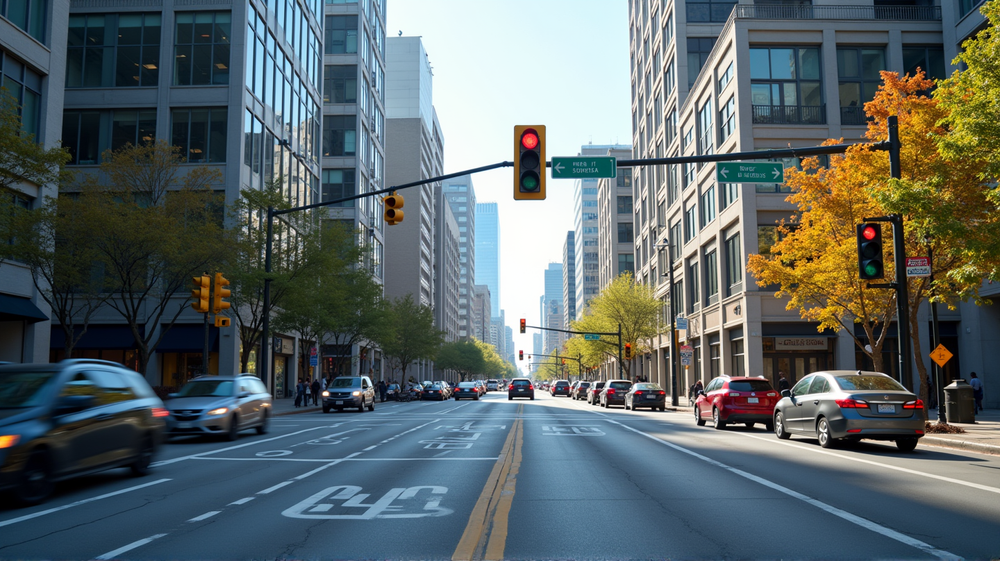
Revolutionizing Traffic: AI-Powered Signals Slash Congestion in Detroit
In a city laid out like Detroit, heavy traffic has long been a conundrum. But a breakthrough from the University of Michigan promises to transform how we navigate these bustling streets. By harnessing AI to efficiently retime traffic signals, researchers claim they’re about to make our daily commute less frustrating and more seamless.
Innovation in the Making
Traditionally, retiming traffic lights was a slow, expensive endeavor performed perhaps once a decade, often leaving intersections ill-suited to current traffic conditions. Craig Bryson from the Road Commission for Oakland County shared how labor-intensive this task was — reliant on human workers manually counting passing cars, prone to fatiguing errors.
A New Dawn with AI
Enter the University of Michigan’s new AI project. Using anonymous GPS data from vehicles, researchers can now determine the optimal timing for traffic lights, promising significant improvements in flow. Postdoctoral fellow Zachary Jerome emphasized the breadth of data considered, prioritizing intersections most in need and benefiting every vehicle that cruises through.
Proven Success Across Detroit
Pilot tests have already demonstrated striking results. At intersections along 8 Mile Road, delays plummeted by 30% while traffic stops decreased by 40%. Additional upgrades on 12 Mile Road led to similar success, with a notable 20% reduction in delays and stops, offering a promising glimpse of what’s to come.
Affordable, Global Impacts
This cutting-edge system also comes as a more cost-effective solution. Traditionally costing up to \(5,000 per signal, experts predict optimizing a signal could now cost as low as \)2,500. As Bryson noted, “The beauty is that this can be applied around the world — it’s inevitable.”
The Road Ahead
The $1.4 million grant from the U.S. Department of Transportation symbolizes a commitment to this vision. Jerome lauds the expansive potential: “As connectivity increases and technology evolves, our research will significantly pave the way for future advancements on roadways.”
According to Michigan Public, this isn’t just a technological marvel but a leap towards safer, frustration-free urban driving experiences. Amid digital evolution, Detroit is poised to become a beacon for transformative infrastructure innovation.