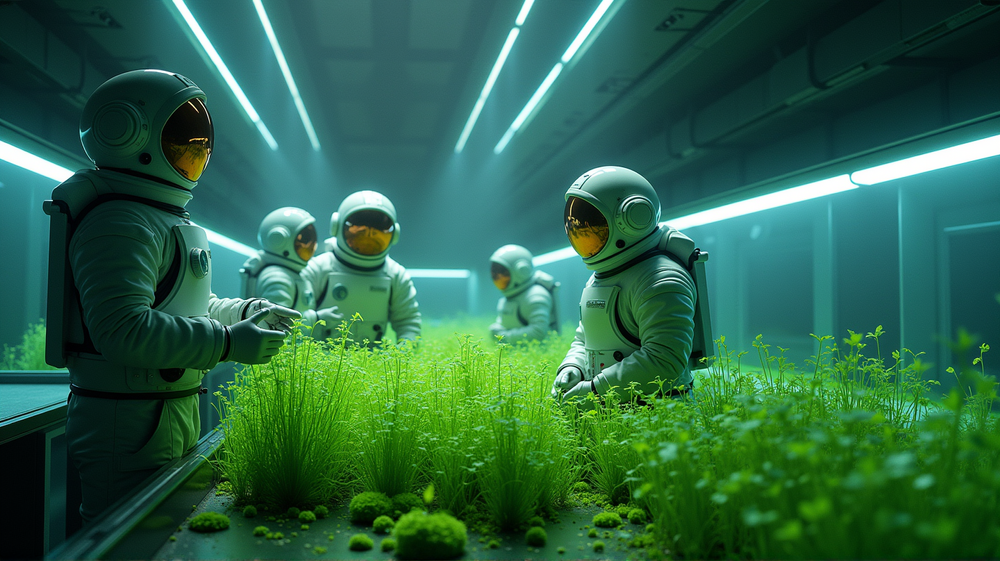
Unlocking Chlorella Vulgaris's Space Superfood Potential
The quest to sustain life beyond Earth is a topic that continues to captivate scientists around the globe. In the latest groundbreaking research, the humble microalga, Chlorella vulgaris, has showcased its impressive potential as a superfood for space missions. When subjected to simulated lunar and microgravity conditions using advanced 3D clinostat technology, Chlorella vulgaris has exhibited significant physiological adaptations, making it a promising candidate for Bioregenerative Life Support Systems (BLSS).
The Pioneering Study
Conducted by a team of researchers led by Giacomo Fais and Alessandro Concas, this study delved into the effects of reduced gravity on C. vulgaris. The experiments revealed an incredible 170% increase in chlorophyll and carotenoids and a 160% surge in polyphenols and antioxidant activity under lunar and microgravity conditions. Such enhancements suggest a remodeling of cellular membranes, focusing on energy conservation and efficient photosynthesis. According to Nature, this breakthrough promises C. vulgaris as a vital source of nutrient-rich biomass, oxygen, and antioxidants in closed habitats.
A New Frontier in Space Food
The potential of C. vulgaris extends beyond its traditional role on Earth. Its robust antioxidant properties not only enrich its nutritive value but also present a sustainable solution for space missions. As space exploration endeavors to extend human presence to the Moon, Mars, and beyond, the need for reliable, nutrient-dense food sources becomes paramount. The antioxidant-rich profile of C. vulgaris addresses this demand, paving the way for its inclusion in astronauts’ diets.
Membrane Resilience and Adaptability
A fascinating aspect of the study was the insight into C. vulgaris’s lipidomic adaptations. The increase in galactolipids and triacylglycerols suggests the microalga’s ability to repurpose its cellular components to withstand extreme conditions. This membrane resilience ensures not just survival but enhanced functionality in environments with limited resources and varying gravitation forces.
Implications for BLSS and Future Research
The research establishes a foundational understanding of how microalgae can contribute to life support systems on extraterrestrial missions. C. vulgaris’s adaptability and efficiency highlight its potential in providing essential resources such as oxygen, nutrients, and even biofuel. However, further research is necessary to validate these findings under actual space conditions. The team emphasizes the need for subsequent studies to explore real partial gravity environments to ensure optimal utilization of C. vulgaris’s capabilities.
A Vision for Sustainability in Space
The promising results of the study echo the broader scientific vision for sustainable life support systems in space exploration. By leveraging C. vulgaris’s potential, scientists are closing the gap between current technological capabilities and the requirements for long-term space habitation. The future of space missions may very well hinge on these tiny powerhouses, offering an unmatched blend of efficiency, resilience, and sustainability.
In conclusion, Chlorella vulgaris is proving to be more than just an Earthly superfood; it’s a cornerstone for future space colonization efforts, offering innovative solutions to the complex challenges of sustaining human life in space.